The area of biomechanics and quantitative physiology seeks to develop the study of the structures and functions of biological systems using the principles and methods of mechanics, but also implementing an engineering perspective based on mathematical models. Thus, IIBM-driven studies have been based on understanding systems through the integration of high-throughput experimental techniques, data processing and computational modeling.
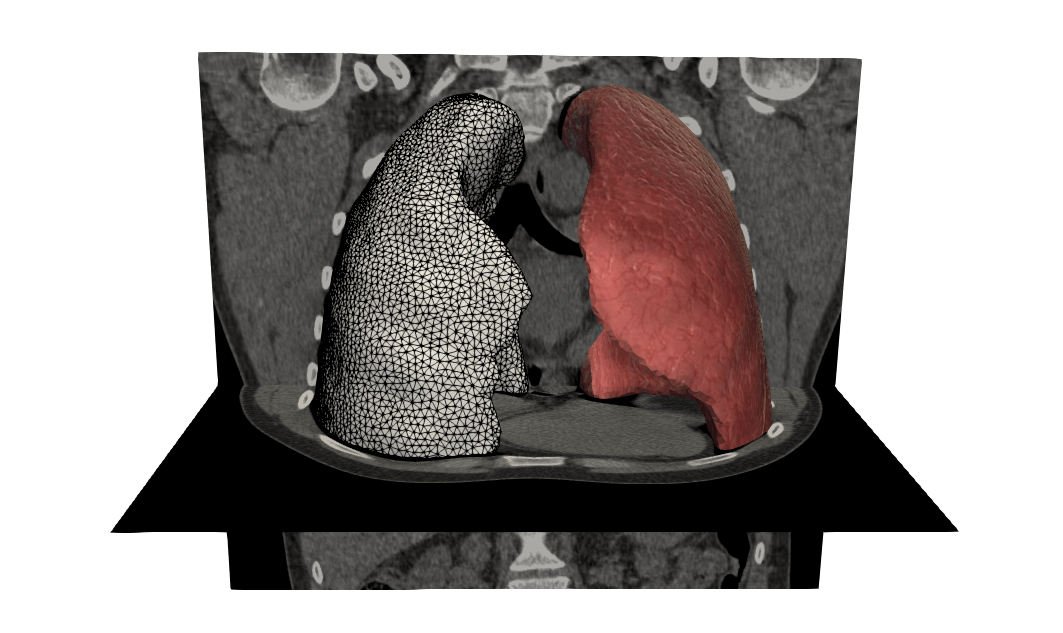
One of the advances in this area is the creation of a computational platform to measure the local deformation of the lungs induced by mechanical ventilation. Another is the quantification of cardiovascular flow through magnetic resonance imaging, in order to explain the effects in diseases such as multiple sclerosis, ruptured aneurysms or thrombosis. In addition, the study of the electrical behavior of the heart has been developed, proposing mathematical models that allow a representation of the heart.
In addition, research groups at the institute have observed the responses of neurons to spinal cord injury by studying models of insect neuronal systems, which resemble the functioning of the human spinal cord. This makes it possible to generate a prototype network of neurons by means of micro neurotransmitters and thus apply the interpretations to reactions of the human nervous system.